If you are looking for a Holter Test in Ghaziabad, GoodHealth21 Diagnostics provides convenient cardiac monitoring services to help evaluate irregular heart rhythms, palpitations, dizziness, skipped heartbeats and other symptoms that may not always appear during a routine ECG. A Holter Test continuously records the heart’s electrical activity, usually for 24 to 48 hours, while you continue your normal daily activities.
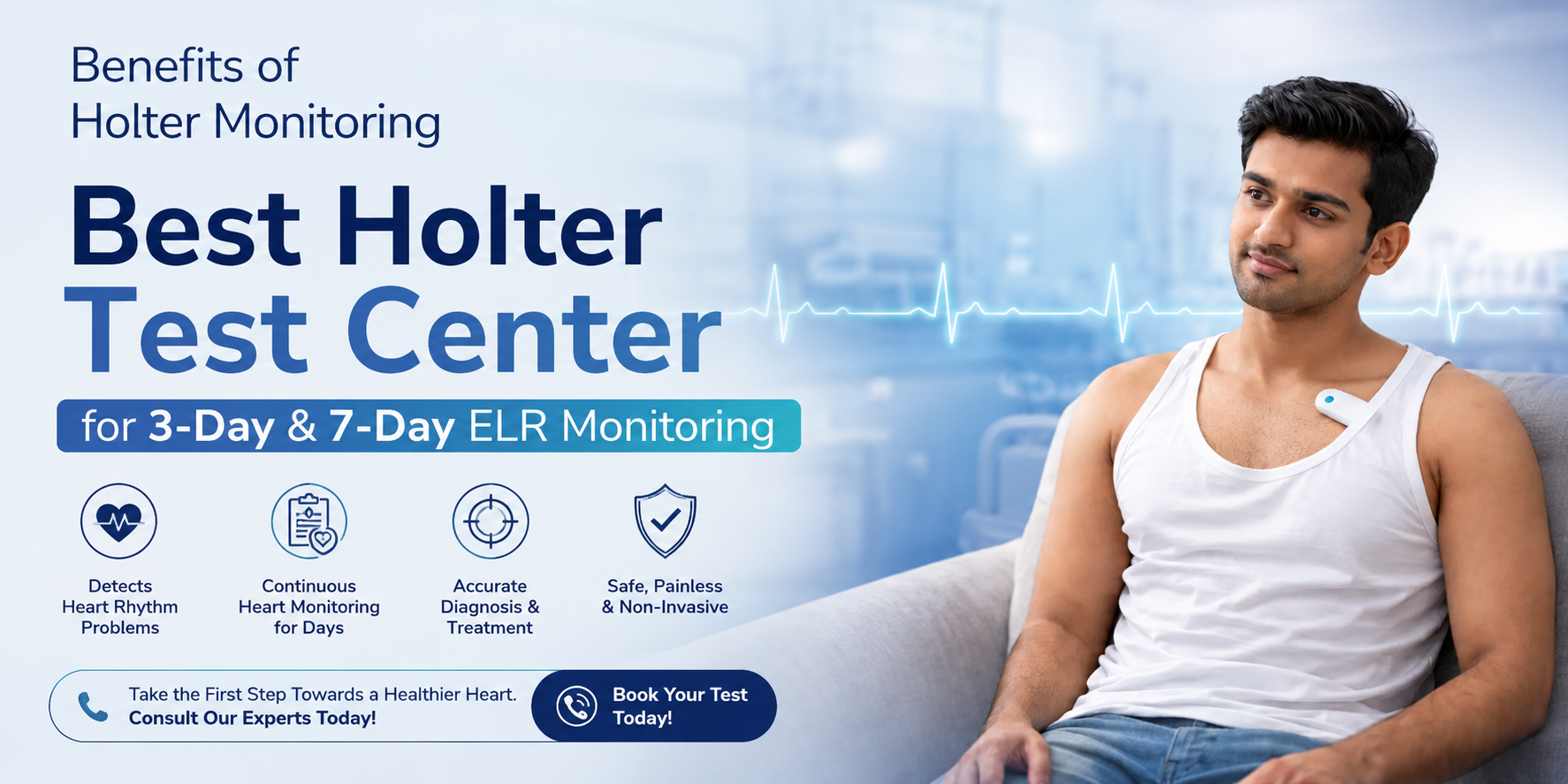
For patients whose symptoms occur less frequently and may not be captured during a standard Holter Test, doctors may recommend extended monitoring such as 3-Day or 7-Day ELR Monitoring. These longer monitoring options can help record intermittent heart rhythm abnormalities and provide more information for clinical evaluation.
GoodHealth21 Diagnostics offers Holter Test at Home in Ghaziabad along with extended ELR monitoring services, making cardiac rhythm monitoring more convenient for patients who prefer testing at home.
What Is a Holter Test?
A Holter Test is a portable cardiac monitoring test that continuously records the electrical activity of the heart over 24 to 48 hours. The patient wears a small recording device connected to electrodes placed on the chest while performing normal daily activities.
Holter monitoring is commonly recommended for evaluating:
- Palpitations
- Irregular heartbeat
- Dizziness
- Fainting episodes
- Chest discomfort
- Suspected arrhythmias
- Heart rate abnormalities
Unlike a standard ECG, which records heart activity for only a few seconds, Holter monitoring provides continuous rhythm analysis over an extended period.
Why Some Heart Rhythm Problems Are Missed in 24 Hours
Although Holter monitoring is highly useful, some cardiac abnormalities occur very infrequently. Certain patients may experience symptoms only during stress, sleep, exercise, or occasionally over several days.
In these cases:
- The abnormal rhythm may not occur during the 24-hour monitoring period
- The Holter report may appear normal despite ongoing symptoms
- Intermittent arrhythmias may remain undiagnosed
- Additional monitoring may be required for accurate evaluation
This is one of the major reasons why doctors may recommend extended cardiac monitoring through ELR devices.
What Is ELR Monitoring?
ELR stands for Event Loop Recorder. It is an advanced cardiac monitoring system designed for long-duration heart rhythm recording. ELR devices continuously monitor cardiac activity over multiple days, helping capture irregular heart rhythms that may not appear during shorter tests.
Depending on the patient’s symptoms and physician recommendation, monitoring may be performed for:
- 3-Day ELR Monitoring
- 7-Day ELR Monitoring
Extended monitoring improves diagnostic accuracy for intermittent symptoms and helps doctors correlate symptoms with actual heart rhythm changes.
Difference Between Holter Test and ELR Monitoring
| Feature | Holter Test | ELR Monitoring |
| Monitoring Duration | 24–48 Hours | 3–7 Days |
| Best For | Frequent symptoms | Occasional symptoms |
| Recording Period | Short-term | Extended |
| Detection Capability | Daily rhythm abnormalities | Intermittent arrhythmias |
| Recommended For | Routine monitoring | Hard-to-detect cardiac events |
Both tests are valuable diagnostic tools, but the selection depends on symptom frequency and clinical evaluation.
Who May Need 3-Day or 7-Day ELR Monitoring?
Doctors may recommend extended ELR monitoring for patients experiencing symptoms that do not occur every day.
Common indications include:
- Occasional palpitations
- Sudden rapid heartbeat
- Irregular pulse
- Unexplained dizziness
- Blackout or fainting episodes
- Intermittent chest discomfort
- Suspected silent arrhythmias
- Symptoms occurring during sleep or physical activity
Longer-duration monitoring increases the possibility of recording abnormal heart activity during these episodes.
Symptoms That May Require Extended Cardiac Monitoring
Some symptoms are brief and unpredictable, making them difficult to capture during routine testing.
Patients should consult a healthcare professional if they experience:
- Fluttering sensation in the chest
- Skipped heartbeats
- Sudden weakness
- Near-fainting episodes
- Racing heartbeat
- Shortness of breath with palpitations
- Night-time cardiac symptoms
- Recurring unexplained dizziness
Extended ECG monitoring may help identify underlying rhythm disturbances associated with these symptoms.
Benefits of 3-Day and 7-Day ELR Monitoring
Better Detection of Intermittent Arrhythmias
Longer monitoring periods improve the chances of capturing abnormal heart rhythms that may not appear in shorter recordings.
Improved Diagnostic Accuracy
Extended monitoring provides more comprehensive rhythm data, helping doctors make better clinical decisions.
Monitoring During Daily Activities
Patients can continue routine activities while the device records heart rhythm continuously.
Useful for Unexplained Symptoms
ELR monitoring is especially helpful for patients whose symptoms occur unpredictably.
Supports Early Cardiac Evaluation
Early detection of rhythm abnormalities can help guide timely medical management and preventive care.
How ELR Monitoring Helps Detect Intermittent Arrhythmias
Intermittent arrhythmias are among the most challenging cardiac conditions to diagnose because they may not appear during a short ECG recording.
ELR monitoring helps by:
- Continuously recording heart rhythm over several days
- Capturing occasional abnormal events
- Correlating symptoms with ECG findings
- Identifying hidden rhythm disturbances
- Assisting physicians in treatment planning
This makes ELR monitoring an important tool in modern cardiac diagnostics.
Holter Test Cost in Ghaziabad
The cost of a Holter Test in Ghaziabad typically ranges from ₹3,000 to ₹7,000, depending on the monitoring duration, type of device used, reporting requirements, and whether the test is performed at a diagnostic center or at home. The price for a 24-hour or 48-hour Holter Test may differ from extended 3-Day or 7-Day ELR monitoring, as longer monitoring provides more comprehensive heart rhythm evaluation.
Before booking the test, patients should confirm the monitoring duration, home installation availability, reporting process, and expected report delivery time. Understanding these details helps ensure that the most appropriate monitoring option is selected based on the doctor’s recommendation.
At GoodHealth21 Diagnostics, we offer Holter Test at Home in Ghaziabad with professional device installation and reliable reporting support. For the latest pricing, available monitoring options, and appointment booking, please contact our team directly.
When Should You Consult a Doctor?
Medical consultation is important if you experience:
- Frequent palpitations
- Sudden irregular heartbeat
- Unexplained fainting
- Recurring dizziness
- Chest discomfort with heart rhythm changes
- Family history of arrhythmias
- Symptoms despite a normal ECG report
A doctor may recommend Holter or extended ELR monitoring depending on the nature and frequency of symptoms.
Frequently Asked Questions (FAQ)
How long does a Holter Test take?
A Holter Test generally records heart rhythm continuously for 24 to 48 hours, depending on the monitoring plan recommended by the healthcare professional.
Can I get a Holter Test at home in Ghaziabad?
Yes, home-based Holter monitoring may be available in Ghaziabad. A trained technician can assist with device placement and instructions so the patient can continue normal activities during monitoring.
What is the difference between a Holter Test and an ECG?
An ECG records the heart’s electrical activity for a short period, while a Holter Test continuously monitors heart rhythm for a longer duration, typically 24 to 48 hours.
Is a Holter Test useful for irregular heartbeat?
A Holter Test can help record irregular heart rhythms and correlate symptoms such as palpitations or dizziness with changes in heart rhythm.
When is ELR monitoring recommended?
Extended ELR monitoring may be considered when symptoms occur occasionally and may not be captured during a shorter monitoring period. The appropriate monitoring duration should be decided by a qualified healthcare professional.
Can I continue my normal activities during Holter monitoring?
In many cases, patients can continue their usual daily activities while wearing the monitor, subject to the instructions provided by the healthcare professional.
📍 Service Areas We Cover in & Around Ghaziabad
Holter Test in East Ghaziabad
Indirapuram, Vaishali, Vasundhara, Kaushambi, Sahibabad, Shalimar Garden, Rajendra Nagar, Surya Nagar, Chander Nagar, Brij Vihar, Gyan Khand, Niti Khand, Ahinsa Khand 1, Ahinsa Khand 2, Abhay Khand, Shakti Khand, Nyay Khand, Makanpur, Prahlad Garhi.
Holter Test in West Ghaziabad
Raj Nagar, Raj Nagar Extension, Govindpuram, Patel Nagar, Kavi Nagar, Nehru Nagar, Shastri Nagar, Chiranjiv Vihar, Avantika, Sanjay Nagar, Vijay Nagar, Crossings Republik, Wave City, Akash Nagar, Madhuban Bapudham.
Holter Test in North Ghaziabad
Muradnagar, Modinagar, Meerut Road, Duhai, Dasna, Dasna Gate, Shahpur Bamheta, Bhojpur, Morta, Chipiyana Buzurg, Lal Kuan, Sikrod, Pilkhuwa Road Area.
Holter Test in South Ghaziabad
Loni, Tronica City, Behta Hajipur, Khora Colony, Tulsi Niketan, Arthala, Mohan Nagar, Hindon Air Force Area, Shyam Park, GT Road, Mohan Meakin Area, Karhera, Pasonda, New Karhera.
Conclusion
A Holter Test in Ghaziabad can help evaluate heart rhythm changes that may not be detected during a short ECG. Continuous 24–48 hour monitoring can be useful for patients experiencing palpitations, irregular heartbeat, dizziness, fainting or other symptoms associated with possible rhythm abnormalities.
When symptoms occur less frequently, a healthcare professional may recommend extended monitoring such as 3-Day or 7-Day ELR Monitoring. The appropriate test and monitoring duration depend on the patient’s symptoms and clinical evaluation.
If you are looking for a Holter Test at Home in Ghaziabad, GoodHealth21 Diagnostics provides convenient cardiac monitoring services with professional assistance. Contact GoodHealth21 Diagnostics to discuss your testing requirements and book an appointment.